

 HSETrain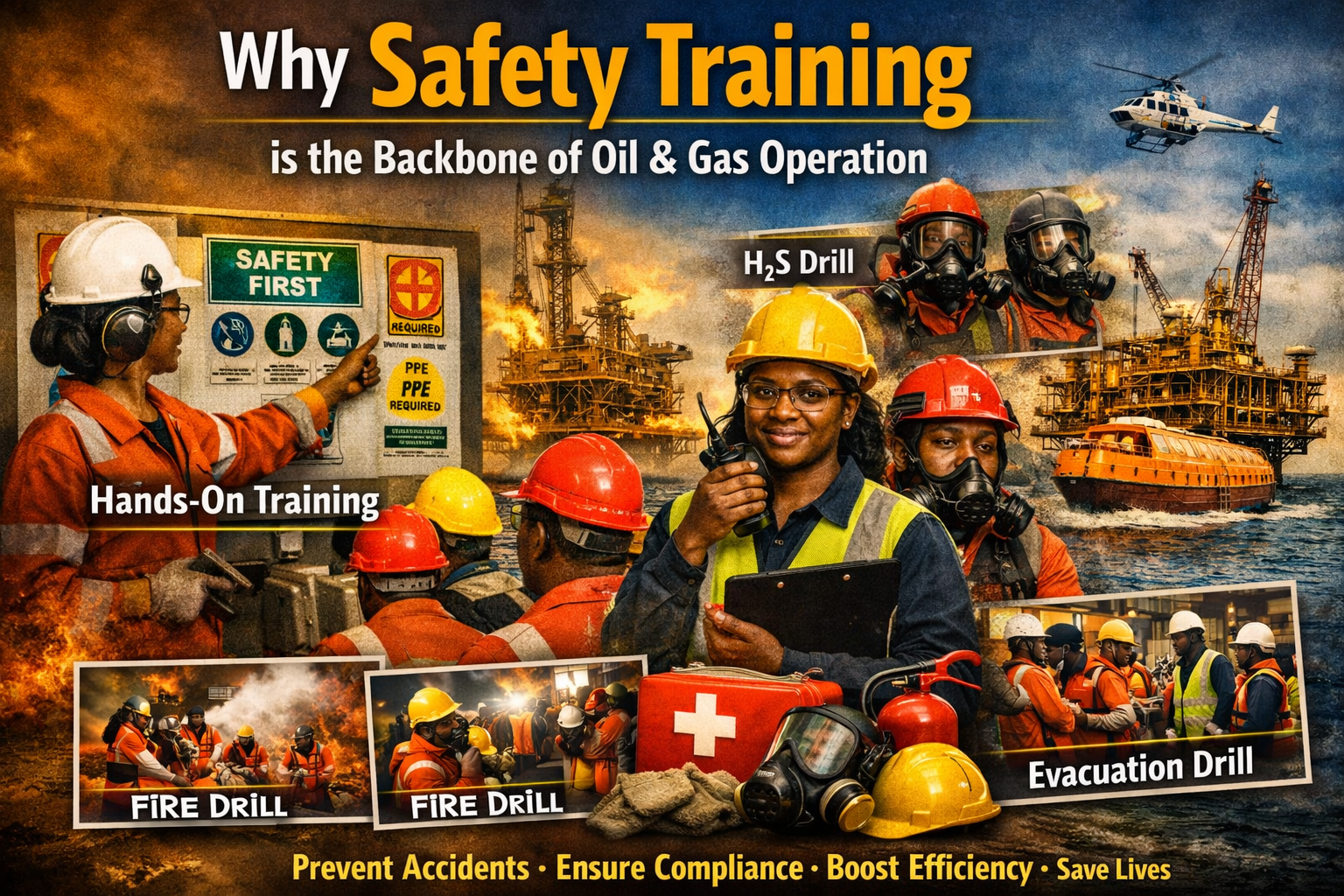
Safety training is the backbone of oil and gas operations because it directly reduces accidents, improves efficiency, and ensures compliance with global standards. In Nigeria, especially in Rivers State, companies like Shell and Chevron require certifications like NEBOSH and BOSIET for all field personnel to operate safely in high-risk environments.
🛡️ Why Safety Training Is Critical in Oil & Gas
1. High-Risk Work Environments
- Workers face hazards like fires, explosions, toxic gas leaks (e.g., H₂S), and confined spaces.
- Safety training teaches how to identify risks, use personal protective equipment (PPE), and respond to emergencies.
2. Regulatory Compliance
- Nigerian oil companies must follow DPR (Department of Petroleum Resources) and international HSE standards.
- Training ensures workers understand legal obligations, reducing fines and shutdowns.
3. Improved Operational Efficiency
- Trained workers make fewer mistakes, handle equipment properly, and follow procedures.
- This leads to fewer delays, lower maintenance costs, and better productivity.
4. Emergency Preparedness
- Safety drills (fire, evacuation, gas leak) prepare teams for real-life incidents.
- Workers learn how to act quickly and calmly, saving lives and minimizing damage.
📚 Key Safety Training Programs in Nigeria
| Certification | Purpose | Common Employers |
|---|---|---|
| NEBOSH IGC | Global safety management | Shell, Total, NLNG |
| BOSIET | Offshore survival and emergency response | Chevron, ExxonMobil |
| H2S Alive | Hydrogen sulfide gas safety | Drilling contractors |
| First Aid & CPR | Basic medical response | All field teams |
| Fire Safety Training | Fire prevention and suppression | Refineries, FPSOs |
🌍 Local Impact in Rivers State
- HSETrain.com and similar institutes in Port Harcourt offer hands-on training with simulators and real-world scenarios.
- Many companies now require safety certification before hiring, especially for offshore roles.
- Safety-trained workers in Nigeria earn 30–50% higher salaries and are more likely to be promoted.
🚨 Consequences of Poor Training
- Increased accidents and fatalities
- Legal penalties and loss of operating licenses
- Damage to company reputation
- Environmental disasters affecting communities
✅ Final Takeaway
Safety training isn’t optional—it’s essential. Whether you’re a roustabout, engineer, or supervisor, investing in HSE education protects lives, boosts careers, and strengthens Nigeria’s oil and gas industry.